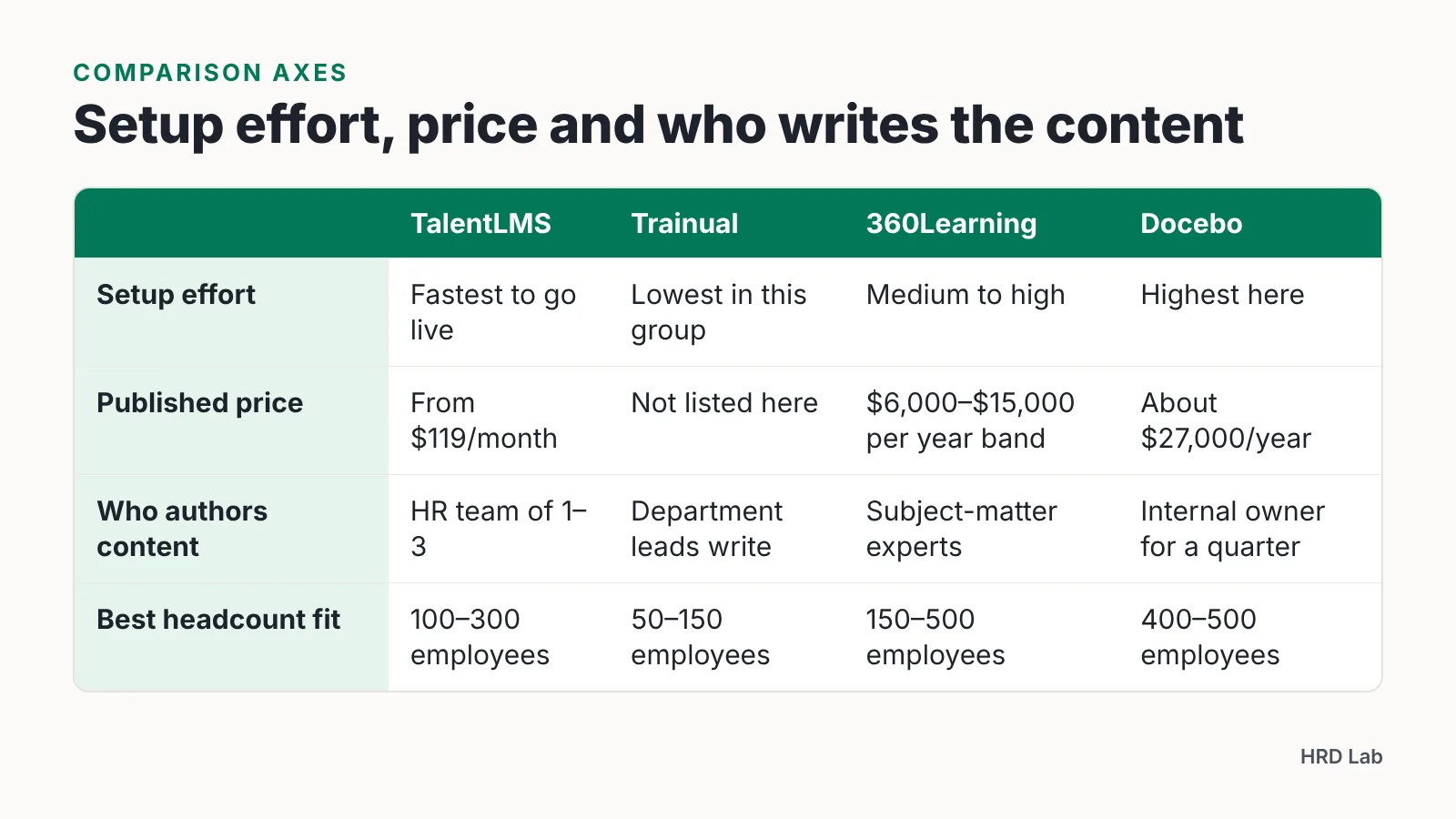
TalentLMS, iSpring Learn, Trainual, 360Learning and Docebo all fit 50–500 employees, but setup effort splits them: Trainual and TalentLMS go live fastest, 360Learning depends on author buy-in, and Docebo needs a procurement cycle.
How we compared
Onboarding at 60 people is one HR generalist, a shared drive and a checklist. At 400 it is cohorts, departments, audit trails and a manager asking for completion data by Friday afternoon. The five tools below were judged on the axes that actually change between those two states.
The comparison axes:
- Setup effort — how much work stands between signing up and a new hire being auto-enrolled in a path.
- Price in a comparable unit — published list prices, read against headcount where the evidence supports it.
- Who authors content — a central L&D owner, department leads, or whoever has time.
- Admin ceilings — branches, reporting, integrations and API limits that bite at 300+ seats.
- Evidence quality — whether published prices exist at all, or whether you have to request a quote.
TalentLMS places a growing mid-market company’s realistic LMS budget at $6,000–$15,000 per year, a band it says includes iSpring Learn, LearnUpon, 360Learning and Absorb LMS. Read that band as a sketch, not a benchmark: it comes from a vendor competing in the same market.
Methodology, and what is not verified here. Prices, tiers and limits come from vendor pricing pages, vendor buyer guides, eLearning Industry’s directory, SelectHub, SoftwareFinder, LMSCost and Capterra. Nothing was trialed in a sandbox by this team, and no vendor supplied a quote.
Not verified: negotiated or nonprofit discounts, real implementation timelines, HRIS and SSO sync behavior at 500 seats, support response times, and whether published tier limits survive a procurement conversation. Treat every setup-effort rating below as an informed read of published tier gating, not a stopwatch measurement.
| Solution | Published entry cost (comparable unit) | Setup effort to first onboarding path | Best fit | Skip it if |
|---|---|---|---|---|
| TalentLMS | Core from $119/mo; Grow from $229/mo (TalentLMS buyer guide) | Low–medium; onboarding workflows sit on Grow | 100–300 staff wanting published pricing | You need enterprise integration ceilings on paper |
| iSpring Learn | No public seat price in our sources; billed on active users only (XLsoft); named inside the $6,000–$15,000/yr mid-market band described by TalentLMS, a competitor | Medium | Bursty, seasonal or cohort hiring | You want one flat, predictable invoice |
| Trainual | No published price in our sources | Low | 50–150 staff documenting roles and process | Your reference risk sits above 300 seats |
| 360Learning | Named in the $6,000–$15,000/yr mid-market band (TalentLMS) | Medium–high; depends on SME authors | Content written by department leads | No one outside HR will write anything |
| Docebo | No rate card; ~$27,000/yr entry (SelectHub) | High; procurement-scale | 400–500 staff, multiple business units | Budget sits under five figures |
| AI Studios (content layer, not an LMS) | Personal plan $24/mo billed annually | Low | Multilingual onboarding video | You only need three short clips a year |
Table note: row 6 is a content tool, not one of the five LMS options — AI Studios produces video files and does not replace any platform above.
1. TalentLMS
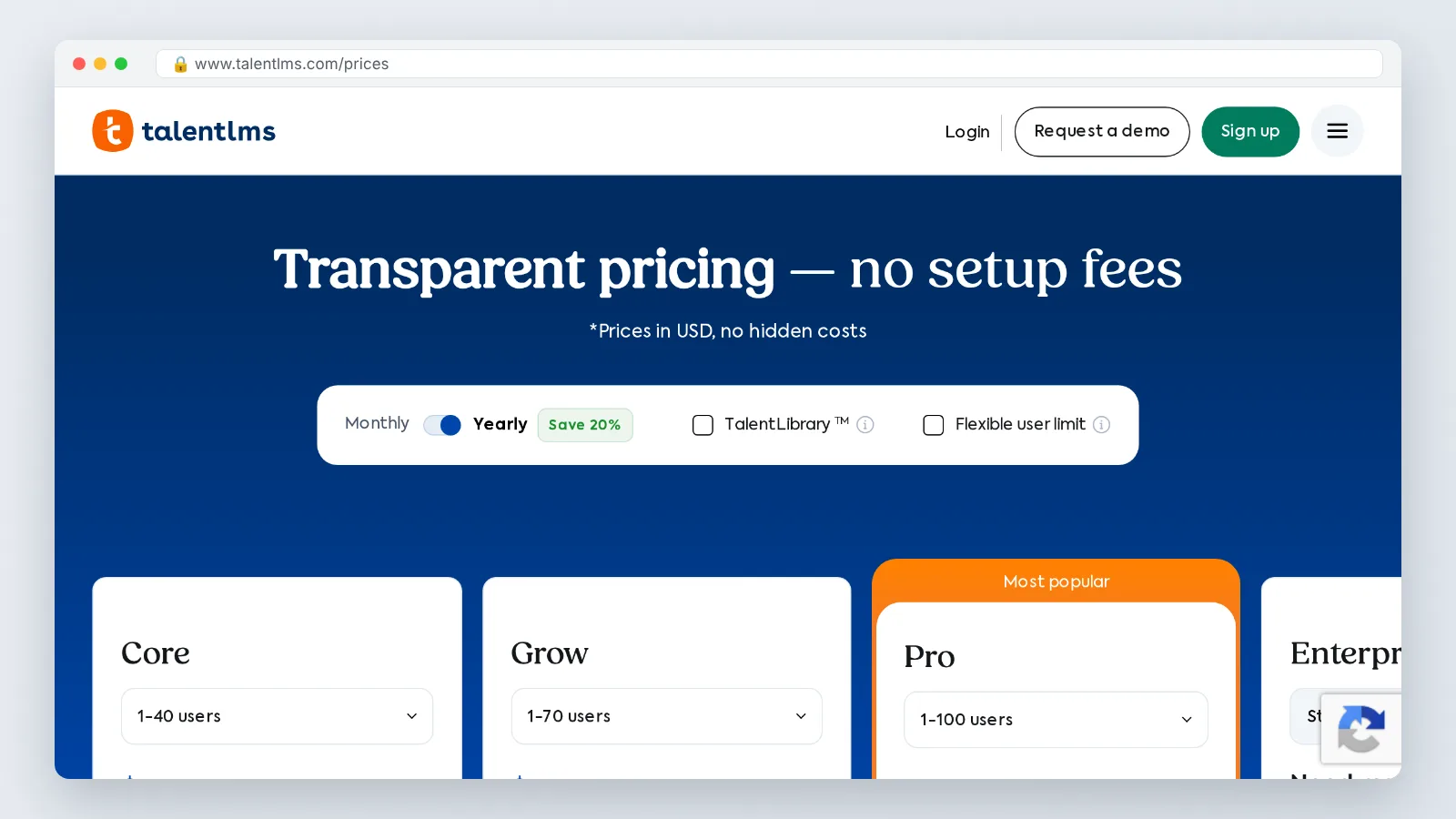
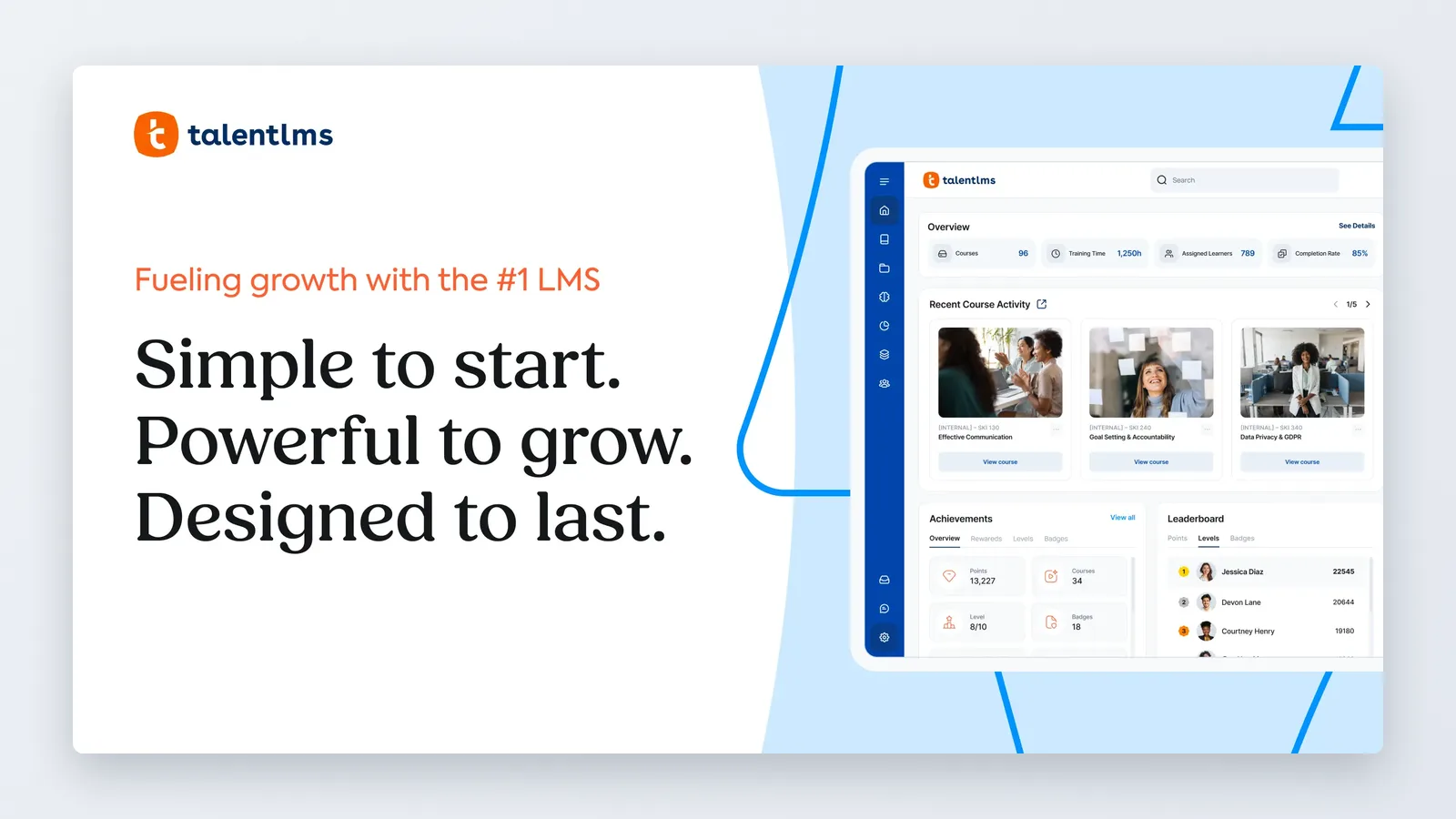
TalentLMS is the shortlist entry for teams that want a price before a sales call. Its own buyer guide lists the Core plan from $119/month and Grow from $229/month, with no lock-in contract and no implementation fees. At list price, Grow works out to roughly $14 per person annually across a 200-person company — and eLearning Industry lists the Grow tier at up to 500 active users, so that is where the arithmetic stops holding.
The tier gating matters more than the headline. Onboarding workflows, multiple branches and custom reports sit on TalentLMS’s Grow tier at $229/month rather than on the entry plan, per eLearning Industry’s TalentLMS pricing listing. Budget for Grow if automated enrollment is the reason you are buying.
Growth can be billed gently rather than in cliffs. TalentLMS charges overage on its Pro plan at $6 per additional user once the plan’s 100-user cap is passed, so headcount growth is billed incrementally instead of forcing an immediate tier jump. Note the scope: LMSCost lists that $6 figure for the Pro plan specifically, and it may not describe how Grow’s active-user allowance is billed. Confirm the overage rule for the exact tier you buy.
Who it’s for: an HR team of one to three people at 100–300 employees who needs automated enrollment live this quarter without an implementation project.
Skip it if: your procurement team wants documented API rate limits, sandbox environments and extended-enterprise domains written into a contract. That is a different class of purchase.
2. iSpring Learn
Dormant accounts are the quiet cost in onboarding software. You create 40 logins for a September cohort, and 30 of them sit idle by November while the invoice stays the same.
iSpring bills only for active users — people who log in at least once in a month — so registered but dormant new-hire accounts do not add cost, according to XLsoft’s iSpring Learn pricing page. That shape suits uneven hiring: 20 new starters in March, two in July, no penalty for the quiet months.
The trade-off is forecasting. An active-user model makes the annual number harder to predict than a flat seat band, which finance teams sometimes dislike more than they dislike the cost itself. For planning, TalentLMS names iSpring Learn inside its $6,000–$15,000 per year mid-market band — useful as a rough sketch, with the caveat that TalentLMS competes in the same market.
Setup effort lands in the middle, and the demo is where you pin it down. Ask who builds the first course, how a new hire gets auto-enrolled on day one, and what happens to their record if they log in once and vanish for two months.
Who it’s for: a 100–300 person company with seasonal or cohort-based hiring and a finance team comfortable with variable billing.
Skip it if: you need one fixed line item on the annual budget and your CFO rejects usage-based invoices on principle.
3. Trainual
Trainual’s natural job is process and role documentation turned into a structured first-90-days path. If your onboarding problem is "nobody wrote down how we actually do this," that framing fits.
Size is the deciding variable. Capterra’s Trainual profile shows small businesses make up 90% of its reviewers, with real estate the single largest industry at 8%. The practical reading is not that it fails at scale — it is that peer references thin out exactly where your risk rises, at 300 to 500 employees.
Setup effort is the lowest in this group for a simple reason: you are mostly writing, not configuring. A department lead can draft a role path without an admin certification, which is why small teams get live quickly.
Who it’s for: a 50–150 person company where onboarding means policies, role handbooks and repeatable process, not SCORM libraries or certification cycles.
Skip it if: your onboarding must produce audited compliance records across multiple branches. Verify that capability directly in a demo rather than assuming it, because the reviewer base that would surface problems at that scale is small.
4. 360Learning
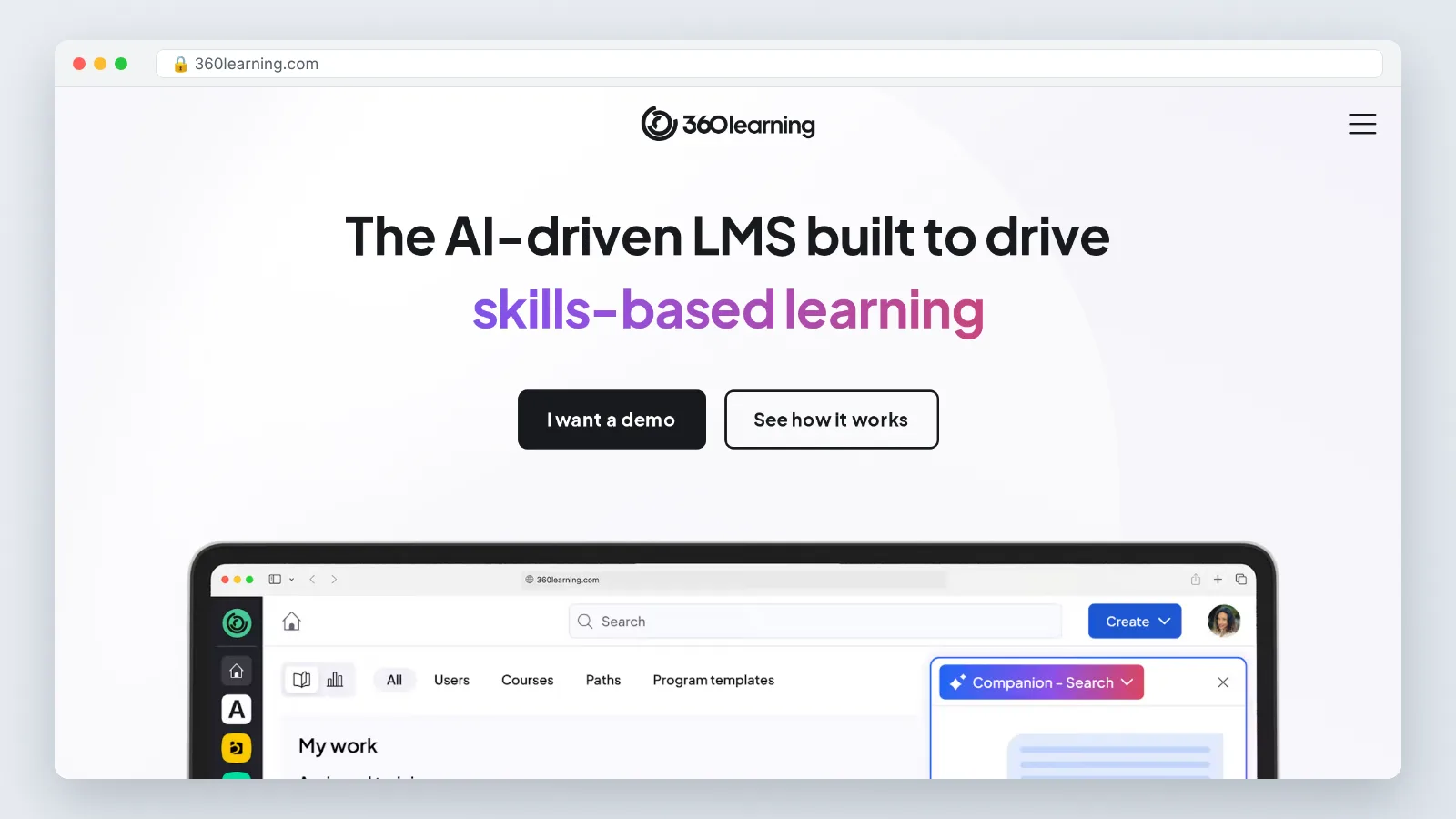
360Learning earns a shortlist slot when the bottleneck is authorship, not software. If your subject-matter experts — the sales manager, the warehouse lead, the clinical supervisor — must write onboarding content themselves, that is the model to evaluate.
Budget-wise it sits in the mid-market band: 360Learning appears by name inside the $6,000–$15,000 per year range TalentLMS describes as realistic for a growing mid-market company, alongside iSpring Learn, LearnUpon and Absorb LMS.
Setup effort is medium to high, and almost none of it is technical. The work is persuading five or six busy managers to draft, review and maintain content on a schedule, then keeping that habit alive after the launch enthusiasm fades.
Run a two-week test before you sign. Pick one department, ask the lead to produce a short onboarding module unaided, and watch whether it happens without three reminders from HR.
Who it’s for: a 150–500 person company where department leads own their own onboarding content and L&D acts as editor rather than author.
Skip it if: HR will realistically write everything anyway. You would be paying for a collaboration layer nobody uses.
5. Docebo
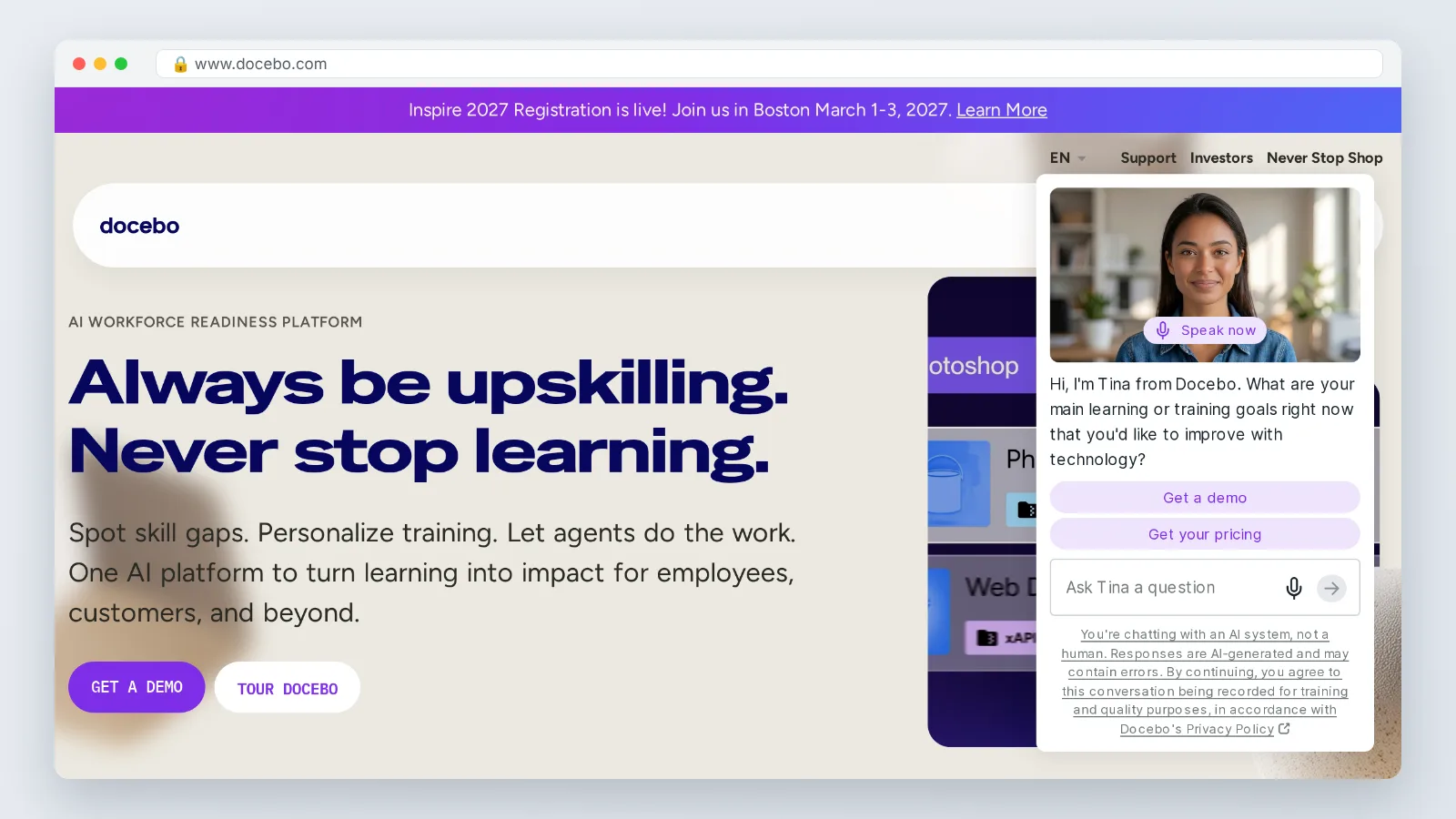
Docebo is the enterprise-shaped option in this list, and the pricing reflects that. Docebo does not publish a rate card, and SelectHub’s own pricing analysis puts entry cost at about $27,000/year.
For a 200-person company, that figure sits in a different budget class from the published monthly list prices earlier in this piece. The reversal only makes sense if you need the ceilings.
Those ceilings are documented and tiered. Docebo’s Enterprise tier allows integration of up to 6 tools, up to 10 extended-enterprise domains, two sandbox environments and API access at 100 calls per minute, per SoftwareFinder’s Docebo listing. Check those numbers against your HRIS, payroll and ticketing stack before anyone signs.
Setup effort is the highest here: expect a procurement cycle, a configuration phase and an internal owner whose job for a quarter is partly this.
Who it’s for: a 400–500 person company with several business units, external partners or franchisees, and a procurement process that expects contractual limits.
Skip it if: your total L&D budget is under five figures, or one HR generalist will administer the whole thing alone.
Which one fits you
Match the situation, not the feature list.
| Your situation | Start with |
|---|---|
| 50–150 staff, onboarding is mostly role and process documentation | Trainual |
| Hiring comes in bursts and accounts sit dormant between cohorts | iSpring Learn |
| You need onboarding workflows, branches and custom reports at a published price | TalentLMS Grow |
| Department leads will write and maintain the content | 360Learning |
| 400–500 staff, multiple units or partners, procurement wants contractual limits | Docebo |
| The same onboarding video has to exist in several languages | A video tool feeding whichever LMS you pick |
That last row is a content problem, not a platform problem. AI Studios, DeepBrain AI’s avatar video platform, creates AI avatar videos, text-to-video content and video translations in one cloud workspace, which suits a welcome module that must ship in more than one language.
Its Personal plan is listed at $24 per month billed annually and includes unlimited AI videos up to 30 minutes each, 1080p export, 3 custom avatars, 120 minutes of AI dubbing per month and 60 generative credits per month. Text-to-speech voiceovers cover 150+ languages and accents on paid plans, and 30+ languages on the Free plan, which costs $0 and allows 3 videos of up to 1 minute each in 720p.
The limitation is plain: it is not an LMS. It produces video files, so enrollment, completion tracking and compliance records still live in TalentLMS, iSpring Learn, Trainual, 360Learning or Docebo. If you need three short clips a year in one language, a phone, a tripod and a quiet room cost less.
Pick the LMS against your headcount trajectory for the next 18 months, then solve content separately. Buying enterprise ceilings at 80 employees wastes money; buying a documentation tool at 450 employees wastes a renewal cycle.
Frequently asked questions
What is the cheapest onboarding LMS with published pricing?
Of the tools here, TalentLMS publishes the lowest entry figure: its buyer guide lists Core from $119 per month and Grow from $229 per month, with no lock-in contract and no implementation fees. Grow is the tier that carries onboarding workflows, so price your budget against $229 rather than $119.
How much should a 200-person company budget for onboarding training software?
TalentLMS places a growing mid-market company’s realistic LMS budget at $6,000–$15,000 per year, a band it says includes iSpring Learn, LearnUpon, 360Learning and Absorb LMS. Treat that as a planning range from a vendor in the same market, and add internal admin time, content production and integration work on top.
Why does Docebo cost so much more than the others?
Docebo does not publish a rate card, and SelectHub’s own pricing analysis puts entry cost at about $27,000/year. You are buying documented ceilings: its Enterprise tier allows integration of up to 6 tools, up to 10 extended-enterprise domains, two sandbox environments and API access at 100 calls per minute, per SoftwareFinder.
Do inactive new-hire accounts cost money?
It depends on the billing model. iSpring bills only for active users — people who log in at least once in a month — so registered but dormant new-hire accounts do not add cost, according to XLsoft’s iSpring Learn pricing page. Flat seat-band vendors charge for the seat whether anyone logs in or not.
Is Trainual safe to choose at 400 employees?
Check references carefully first. Capterra’s Trainual profile shows small businesses make up 90% of its reviewers, with real estate the single largest industry at 8%, so published peer feedback thins out at the headcount where multi-department reporting and compliance records start to matter. Ask the vendor for two customers at your size.
Sources
- iSpring LMS Pricing — XLsoft
- LMS Pricing Models: Real LMS Costs & Tips for Buyers — TalentLMS
- TalentLMS Pricing: Cost and Pricing Plans — eLearning Industry
- TalentLMS pricing — LMSCost vendor profile
- Docebo Reviews & Pricing — SelectHub
- Docebo: Pricing, Free Demo & Features — SoftwareFinder
- Trainual Software Review: Features, Integrations, Pros & Cons — Capterra
AI tools helped write this guide. The HRD Lab Editorial Team published it after checking every figure against the sources linked above.